A growing labour shortage is creating serious challenges for multiple sectors, as workers migrate back to their home states amid ongoing electoral activities and rising living costs. Businesses, especially in hospitality and textiles, are now dealing with a dual crisis—limited workforce availability and disruptions caused by LPG shortages.
Thank you for reading this post, don't forget to subscribe!Labour Migration Linked to Electoral Activities
A significant number of workers, particularly from West Bengal, have returned home to participate in the Special Intensive Revision (SIR) process. Many of them are expected to come back only after the completion of election-related activities.


At the same time, some workers are now moving toward Odisha, where similar exercises are scheduled to begin from April 1. This continuous movement of labour is reducing the available workforce in key business hubs.

LPG Shortage Adds to Operational Pressure


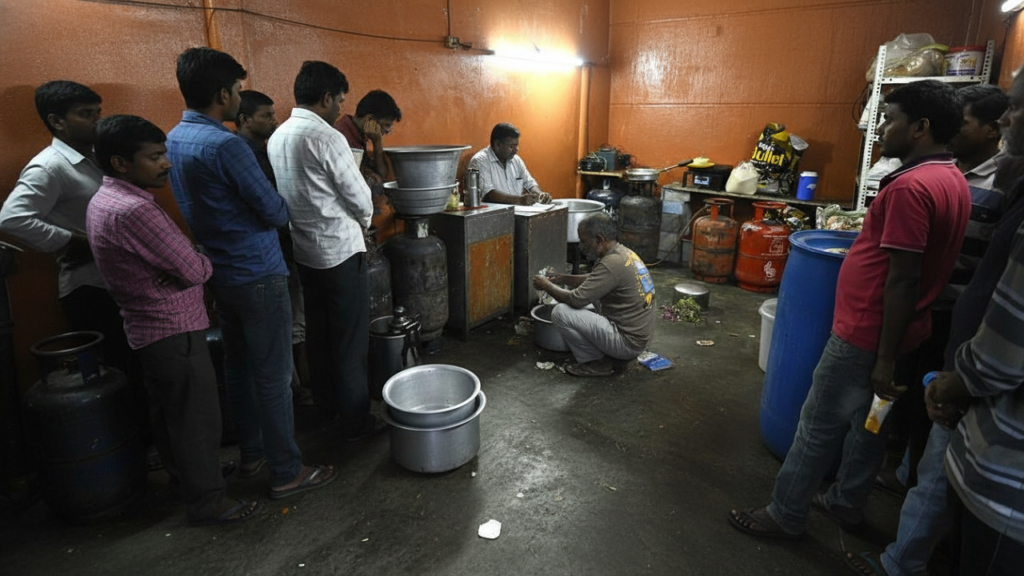
Traders across industries report that the ongoing LPG shortage is already affecting daily operations. Hotels and food businesses, in particular, are struggling to maintain regular services due to inconsistent fuel supply.

When combined with the lack of available workers, the situation becomes even more difficult, leading to reduced productivity and service delays.

Rising Travel Costs Delay Worker Return
Another major factor worsening the labour shortage is the sharp increase in travel expenses. Many workers who returned home during festivals like Holi and Ramzan have not yet come back.

Business owners note that bus fares have surged by more than 50%, making it financially difficult for workers to return quickly. This has further delayed workforce normalization.
Impact on Key Sectors
Industries such as hospitality, textiles, and small-scale manufacturing are among the worst affected. With fewer workers available, businesses are facing:
- Delays in daily operations
- Reduced service capacity
- Increased workload on existing staff
- Potential financial losses
Growing Concern for Businesses
The combined effect of labour migration, rising travel costs, and LPG shortages is creating uncertainty for business owners. Many fear that if the situation continues, it could lead to long-term disruptions in supply chains and service delivery.
Conclusion
The current labour shortage highlights how interconnected factors like elections, fuel supply issues, and rising costs can significantly impact economic activity. As workers gradually return after electoral processes and travel stabilizes, businesses hope for a recovery—but until then, the pressure remains high.